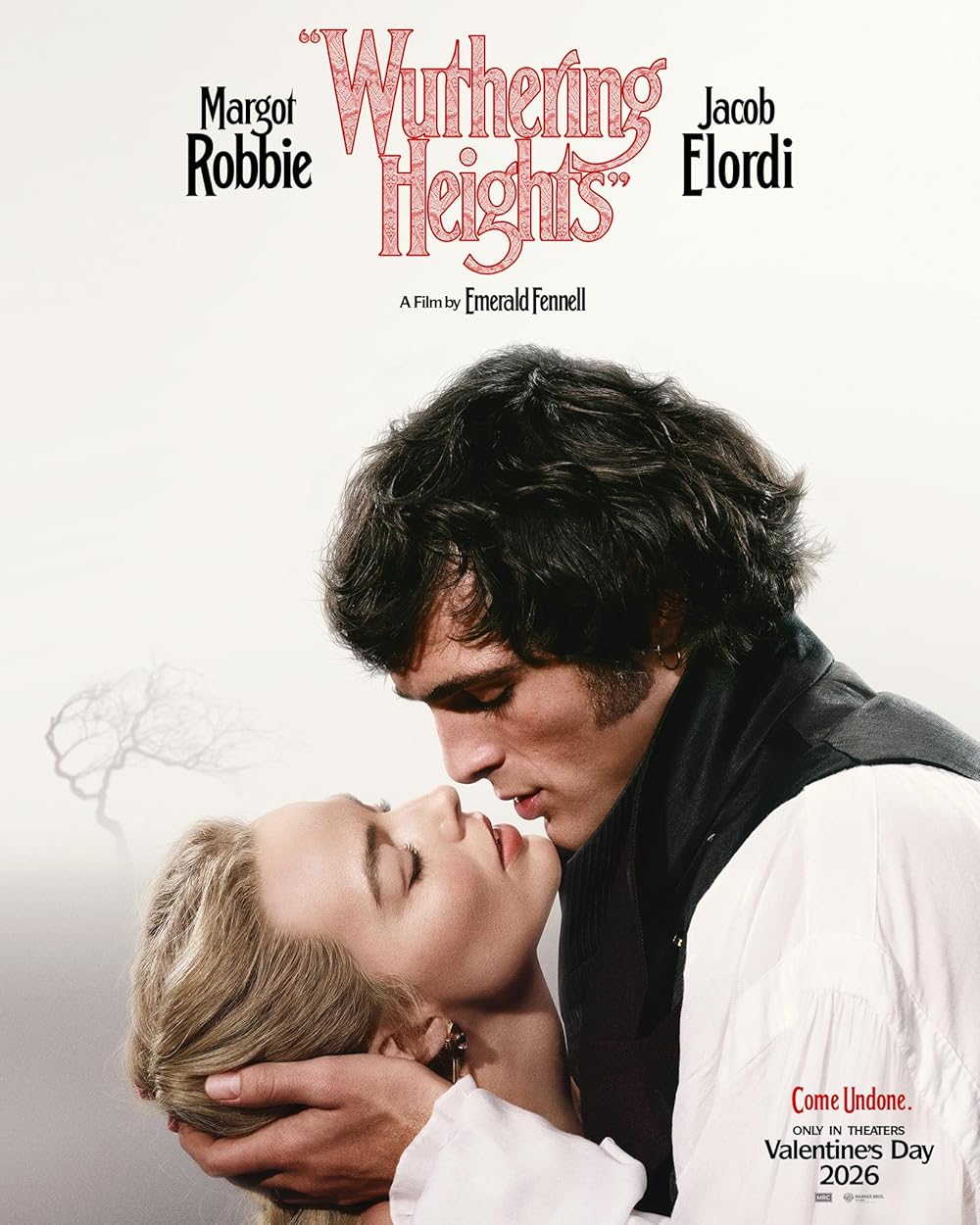
Jacob Elordi’s role as the male lead in the 2026 film Wuthering Heights has faced criticism due to the casting of a white man as a character who is heavily implied to be a person of color in the novel. The controversy has sparked debate among fans of the original novel and film critics alike, with many questioning whether this casting decision weakens one of the story’s central themes.
In Emily Bronte’s 1847 novel Wuthering Heights, Heathcliff is described as dark skinned and is frequently treated as an outsider by other characters, leading most scholars and readers to interpret him as a person of color. Throughout the story, he faces discrimination due to both his appearance and his low social status, which ends up shaping much of his personality and actions.
English teacher Ms. Melissa Adams believes that removing that aspect of the character changes the meaning of the story.
“Taking that out by casting Jacob Elordi removes a lot of the depth of Heathcliff’s character,” Adams said. “A lot of the commentary [is] on how [the ways] society [treats] people of color can break down relationships and cause trauma.”
This new film adaptation is directed by Emerald Fennell and stars Margot Robbie as Catherine Earnshaw alongside Elordi as Heathcliff. Early reactions to the film have been mixed. Some critics have praised its bold artistic decisions, while many others have labelled it as emotionally hollow.
Fennell is known for creating provocative and stylized films, and this adaptation reflects this approach. Instead of recreating the novel, Fennell said her intentions were to capture the emotional experience she had when she read the story as a teenager.
The film features a soundtrack by trending pop artist Charli XCX and includes costume and set design choices that don’t necessarily resonate with the historical time period set in the novel. Utilizing modern elements, the film’s costume designer Jacqueline Durran helps to convey Fennell’s vision of Cathy and Heathcliff’s relationship. At the same time, the movie removes huge sections of the original story. Many adaptations of Wuthering Heights focus only on the first half of the novel, centered around the dramatic relationship between Cathy and Heathcliff, and Fennell’s version follows this pattern. Several crucial plotlines and characters are cut, including Catherine’s brother Hindley, who originally plays an important role in inciting the book’s conflicts.
Adams said leaving out the second half of the novel changes how audiences interpret the relationship between the main characters.
“You don’t see how much it actually hurts the families and the community,” Adams said. “You’re not supposed to want a relationship like Cathy and Heathcliff.”
Some students who have seen the film say they had similar reactions. One PHS junior who watched the movie, Irina Polyakova, said she felt the story lacked emotional depth.
“I didn’t feel connected to any of the characters,” she stated. “Instead of showing how their love was obsessive and destructive, all it showed was a tragic romance, kind of like really bad fan fiction.”
She also said casting Heathcliff as white weakened his role as an outsider in the story.
“Casting Heathcliff as white ruins the whole role that his character is supposed to have,” Polyakova said. “He doesn’t feel like an outsider, it doesn’t make sense why others treat him differently.”
Despite the criticism, the film has still generated significant interest, especially among younger audiences curious about the controversy. Polyakova also stated the movie has made her more interested in reading the original novel to better understand the story behind the debate.
Whether audiences view Wuthering Heights as a bold reinterpretation or merely a flawed adaptation, the discussion surrounding the film shows that Emily Bronte’s classic still continues to spark strong opinions and conversations nearly two centuries after its original publication.